

AI doesn’t learn like we do.
There are no classrooms, no lectures, and no moments of sudden insight.
Instead, it learns through massive exposure billions of examples, patterns, and mathematical adjustments made over and over again.
Understanding how AI learns helps explain why it needs so much data, why humans still play a crucial role, and why the way it “learns” is completely different from how we do.
What “Learning” Means for AI
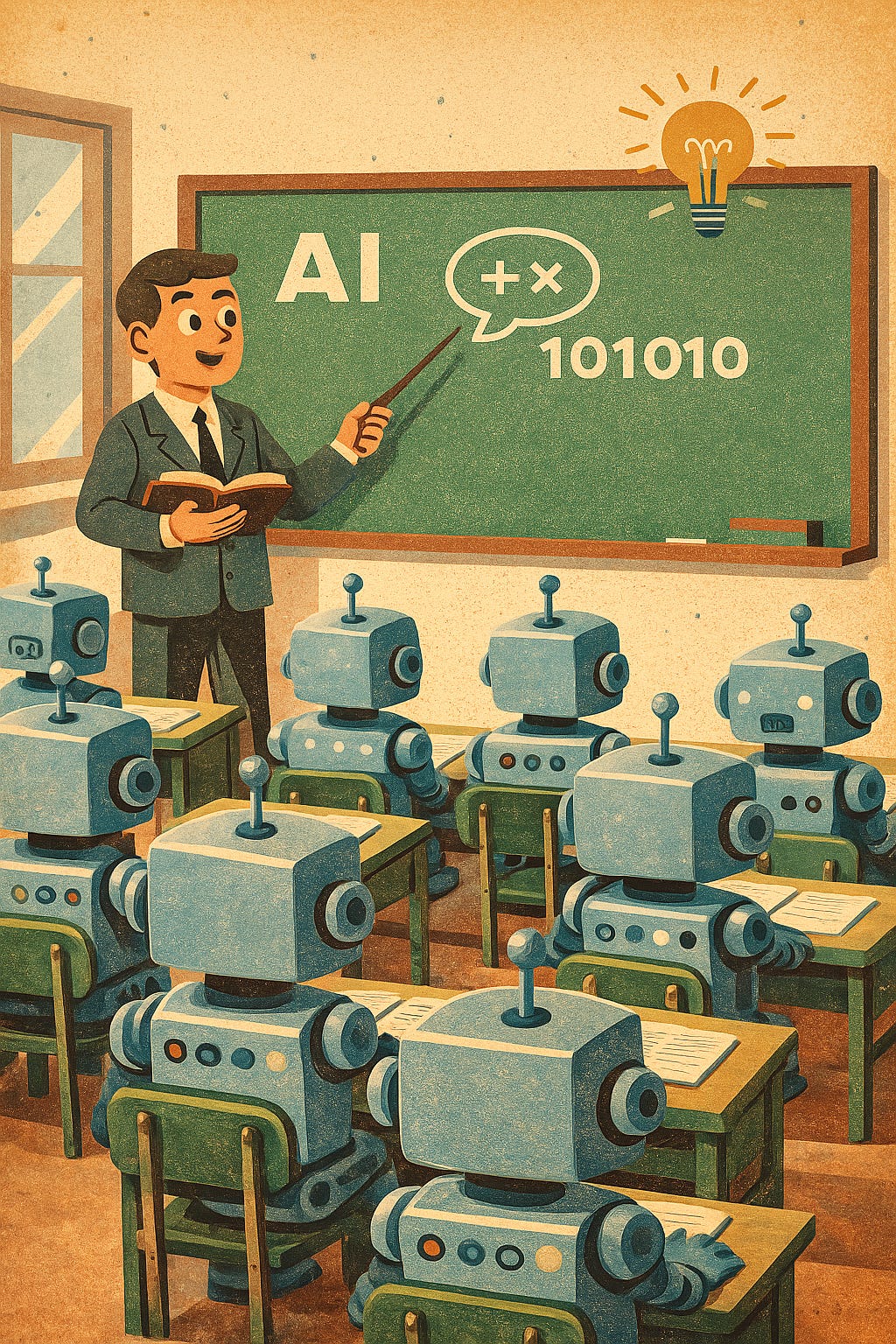
When we say an AI “learns,” we don’t mean it’s studying or understanding. It’s more like tuning an old‑fashioned radio.
At first, everything is static random noise. Then, by twisting the knobs again and again, it gets clearer until the music comes through.
That’s what training does for AI. The “knobs” are millions (sometimes billions) of adjustable settings inside the system. Each adjustment makes the AI a little better at recognizing patterns and predicting what should come next. The goal isn’t understanding its accuracy.
The Three Stages of AI Learning
Training The Big Learning Phase
This is where everything starts. The AI processes enormous amounts of data books, articles, code, images, and more and slowly learns patterns: grammar, sentence flow, cause and effect, even tone. This phase can take weeks or months and requires massive computing power. By the end, the model has broad skills but no real-world sense it’s learned how language or images work, not what they mean.
Fine‑Tuning Specialization
Once the general foundation is set, developers fine‑tune the AI for specific goals. That might mean teaching it to summarize legal documents, write marketing copy, or detect medical patterns. This takes much less data and time but adds the context that makes the AI useful.
Feedback Learning From Mistakes
After training and fine‑tuning, people test the AI and rate its answers. That feedback loop teaches it what’s helpful, what’s confusing, and what to avoid.
Think of this as giving the model “manners” it learns how to respond appropriately, stay on topic, and be safe.
Why AI Needs So Much Data
Humans can learn from a handful of examples we can look at one cat and recognize others. AI isn’t that efficient. It needs thousands or millions of examples to figure out what “makes” a cat: fur texture, ear shape, size, shadows, colors.
It doesn’t know what a cat is it just learns the statistical patterns that make something look like one.
The more data it sees, the stronger and more flexible its pattern recognition becomes. But quantity isn’t everything quality matters too. If the data is biased, incomplete, or full of errors, the AI will reflect those flaws.
The Role of Human Guidance (and Why AI Still Needs Us)
AI can teach itself to some degree but not in the way people often imagine.
Modern systems can use what’s called self‑learning, where they find patterns without humans labeling every example. For instance, if an AI reads billions of sentences, it notices that “cat” often appears near “purr” and “tail.”
It doesn’t understand cats it just recognizes the relationship between those words.
This makes training faster and more scalable, but there’s a catch:
The AI doesn’t know truth from fiction it just mirrors patterns.
If the data includes bias or misinformation, it will learn that too.
It can’t tell what’s ethical, fair, or appropriate without human input.
That’s why people still play a central role reviewing outputs, guiding what “good” looks like, and providing feedback that keeps the AI helpful and safe.
AI might find patterns, but humans provide purpose.
Why AI Needs So Much Computing Power
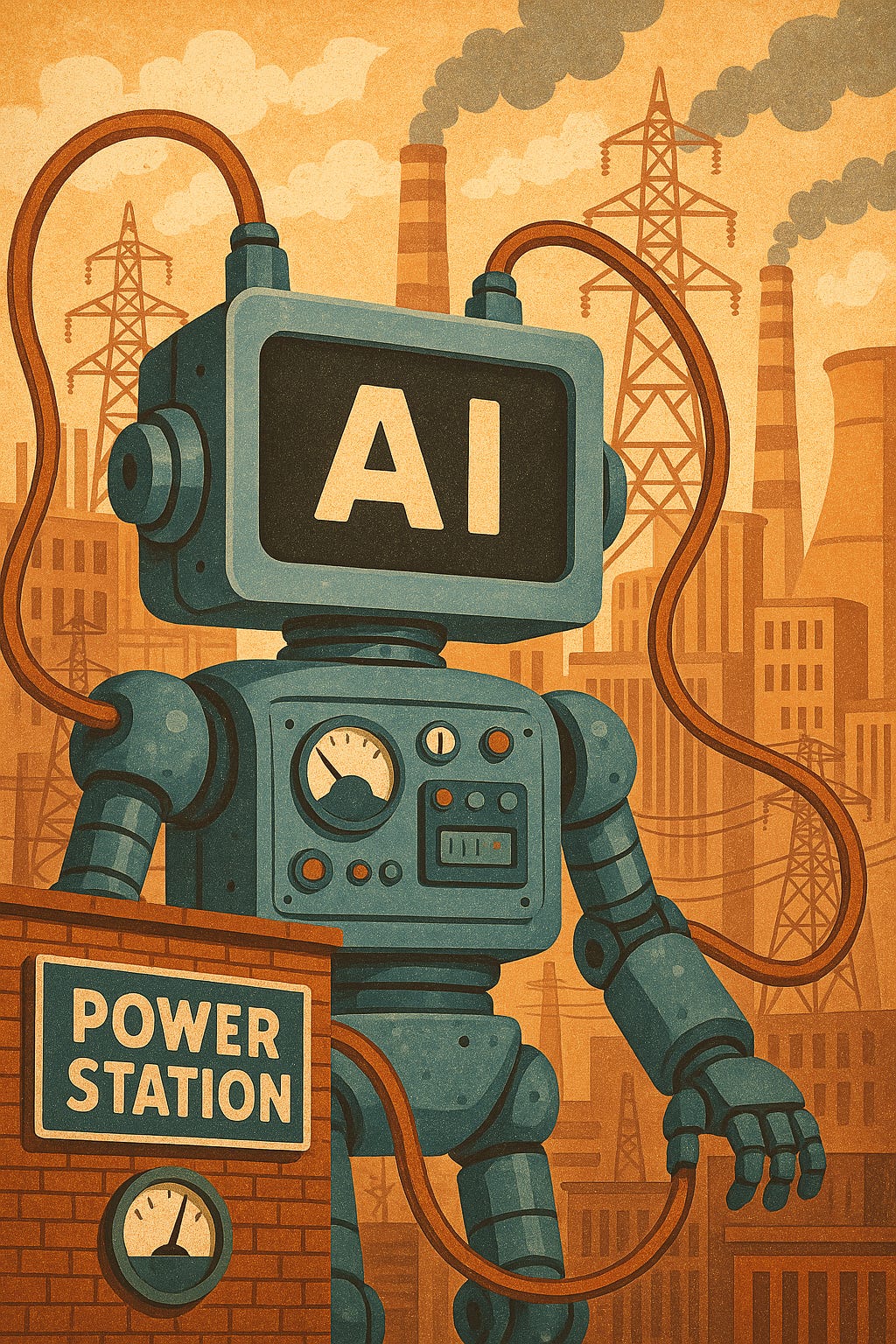
All of that pattern‑matching takes serious muscle. Each tiny adjustment to those millions of “knobs” involves math repeated billions of times.
To handle this, AI training uses specialized processors (GPUs or TPUs) that can perform thousands of calculations in parallel. Think of it like a massive assembly line where every worker tightens one bolt at lightning speed. When billions of those small adjustments happen together, the result is a finely tuned system that’s learned from experience.
It’s powerful, but also expensive. Training large models can cost millions of dollars in computing time and energy.
When AI Gets It Wrong
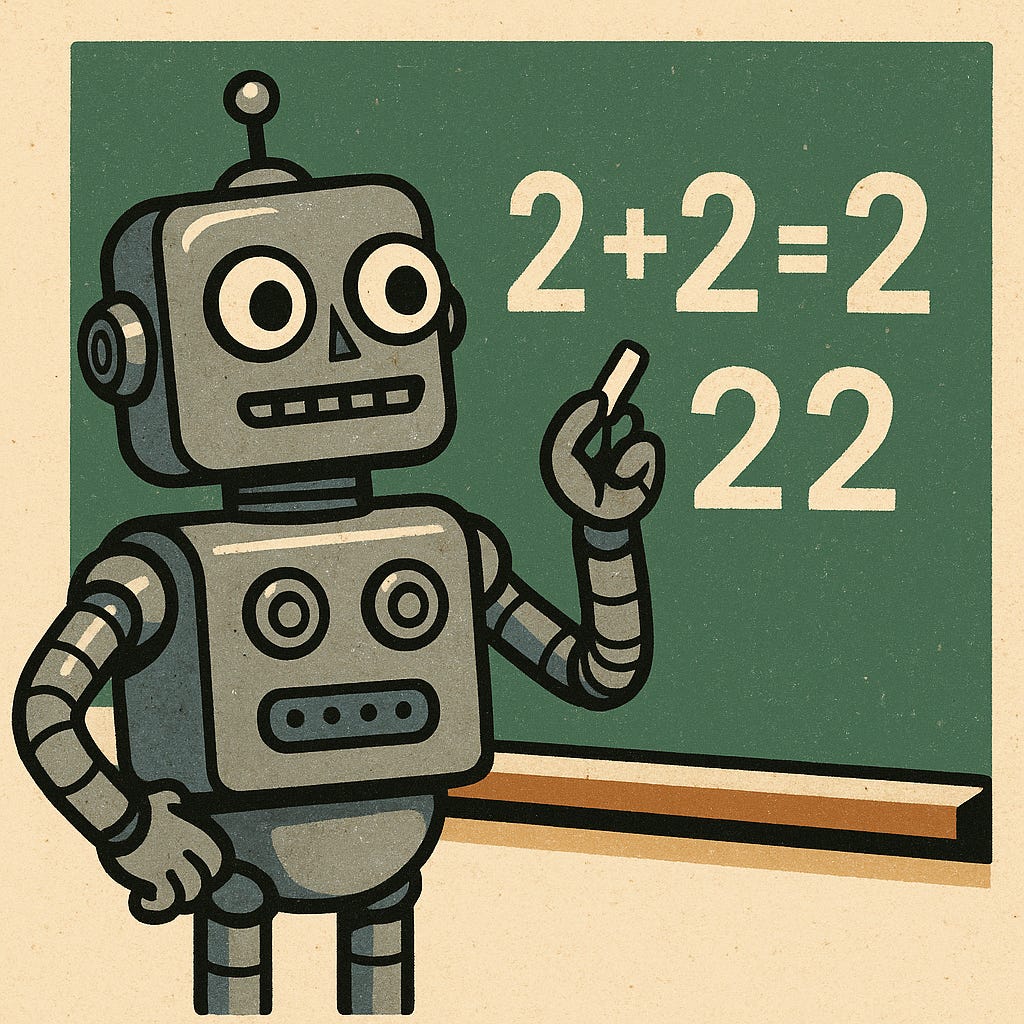
Even with all that power, things can go off‑track.
Too little data, and the AI guesses it doesn’t have enough examples to make accurate predictions.
Too much of the same data, and it memorizes instead of generalizing.
Biased data, and it learns unfair patterns.
No feedback, and it never learns what “better” means.
AI learns from patterns not meaning so without diverse, high‑quality examples and human correction, it can reinforce the wrong lessons.
Why Human Learning Is Still Different
Humans don’t just spot patterns we reason, infer, and imagine. We can learn from one story and apply it to a completely different situation. AI can’t do that. It predicts what’s most likely based on what it’s seen before.
When an AI writes a paragraph, it’s not “thinking” about what it’s saying it’s calculating what word statistically fits next. That’s why it can sound confident even when it’s wrong.
AI is great at pattern recognition, but humans are still the ones who understand meaning, context, and values.
The Future of AI Learning
Researchers are working to make AI learn more efficiently using less data, less energy, and better feedback. The next step is “continual learning,” where AI systems can adapt over time without forgetting what they’ve already learned.
But even then, human partnership will stay essential. AI might learn patterns, but people define the goals, shape the ethics, and decide how that learning gets used.