

When you ask an AI tool to explain a confusing line of code and it answers perfectly it feels almost human. It spots the bug, rewrites the function, even suggests a cleaner approach.
But that’s the fascinating part: the AI doesn’t actually understand your code. It doesn’t know what your project does or what problem you’re trying to solve. It’s not reasoning. It’s predicting.
Code models, like ChatGPT or GitHub Copilot, work by recognizing patterns across enormous amounts of data. They’ve seen so many examples of how humans write, structure, and explain code that they can make incredibly good guesses, guesses that often look like insight.
Where Code Models Learn
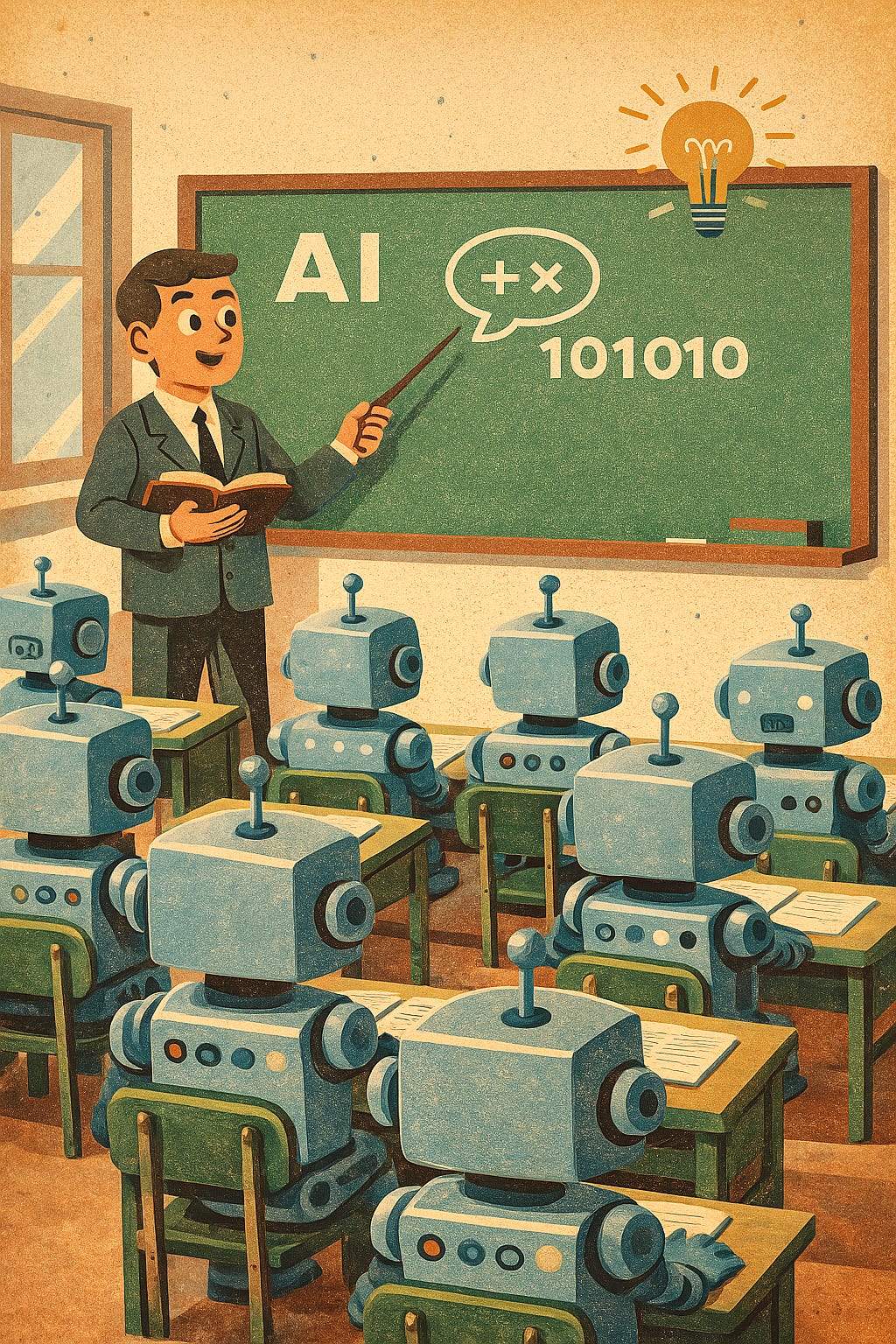
Modern AI models learn from huge datasets that include public code, maybe some not so public code, documentation, tutorials, and technical discussions material that shows how people actually write and describe software.
During training, the AI breaks all this down into small building blocks called tokens think of them like puzzle pieces: keywords, symbols, and snippets.
From those tokens, it learns patterns such as:
The order and structure of code (functions, imports, loops).
How comments describe what code does.
The typical flow from setup → logic → output.
Naming habits and styles used across different programming languages.
It doesn’t memorize the codebases it trains on.
Instead, it learns what tends to happen next in different situations the rhythm and shape of code, not the specific content.
So when it helps you write a function or fix an error, it’s not recalling something it’s seen before. It’s recognizing a pattern and predicting what a good continuation looks like.
How Prediction Becomes “Understanding”
Every time you type, the model predicts what comes next one token at a time.
If you write:
def calculate_
…it predicts that the next word is likely total, sum, or average, because that’s what humans usually write after those letters.
Do that billions of times across countless examples, and the AI becomes remarkably good at guessing what fits not just one line, but entire structures.
That’s why it can explain code you’ve never shown it before.
It’s seen thousands of functions like yours and knows how people usually describe them.
This is the heart of “AI understanding”: it’s not comprehension it’s correlation on a massive scale.
Why It Can Extend Code It’s Never Seen
When you ask an AI to “add a logging system” or “improve this function,” it looks for patterns that fit the request.
If the function is handling user data, the AI might suggest adding validation.
If the prompt says “optimize for speed,” it might remove redundant loops or switch to a built-in method.
In both cases, the AI isn’t seeing your app it’s matching your request to familiar problem–solution pairs it has learned from others.
Think of it like a translator who’s never seen your sentence before but knows the grammar well enough to create a fluent translation.
The AI is doing the same translating structure and intent into likely next steps.
The Predictive Logic Under the Hood
Inside, the process looks like this:
Break input into tokens each keyword, bracket, or symbol becomes a data point.
Score each possible next token based on probability from what it learned.
Choose the highest-probability sequence repeat until the task is complete.
Thousands of small predictions come together into something that looks remarkably deliberate.
That’s why even though AI doesn’t “know,” it can appear to reason.
It’s a mosaic of probabilities millions of micro-guesses that, from a distance, form a clear picture.
When the Illusion Breaks
Because code models predict instead of reason, they can sound confident while being wrong.
Common pitfalls include:
Outdated examples: They might use older syntax or libraries that are no longer safe.
Missing context: If you don’t specify framework, version, or purpose, the model fills in the blanks sometimes incorrectly.
Overconfidence: It can describe mistakes in perfect English.
For example, an AI might recommend a function that doesn’t exist or a dependency that looks real but isn’t. It’s not lying it’s guessing based on the patterns it’s seen.
That’s why even though these tools save time, human review remains essential.
Prediction can be impressive but reliability comes from oversight.
Why Code Models Are So Good at What They Do
Part of the reason AI performs so well in programming is that code has structure strict rules, indentation, syntax. That structure makes it easier for a machine to learn consistent patterns.
On top of that, open-source projects and documentation often include explanations, examples, and tests giving the model not just code, but context.
This combination teaches the AI how coding decisions connect to outcomes.
Engineers also fine-tune these models with feedback loops rewarding answers that are correct, clear, and secure. Over time, the model gets better at predicting results that feel like reasoning.
What This Means for You
Understanding how code models “think” helps you use them better.
Give context: The clearer your request, the more accurate the AI’s prediction.
Guide its focus: Specify tools, versions, or style preferences.
Stay in the loop: AI is a collaborator, not a replacement.
Use it for exploration: It’s great for testing ideas, learning patterns, and brainstorming not for skipping review.
AI models don’t take away expertise; they make it easier for anyone to express intent clearly and move faster from concept to code.
The Useful Illusion
AI doesn’t truly understand code it just predicts what’s likely to come next.
But prediction at this scale feels like intuition, and that illusion can be powerful.
The value isn’t in pretending the AI is human. It’s in using this predictive intelligence thoughtfully to build, test, and learn more efficiently.
The more we understand how it works, the better we can guide it. And that’s the real magic not that it “knows,” but that it helps us know more.